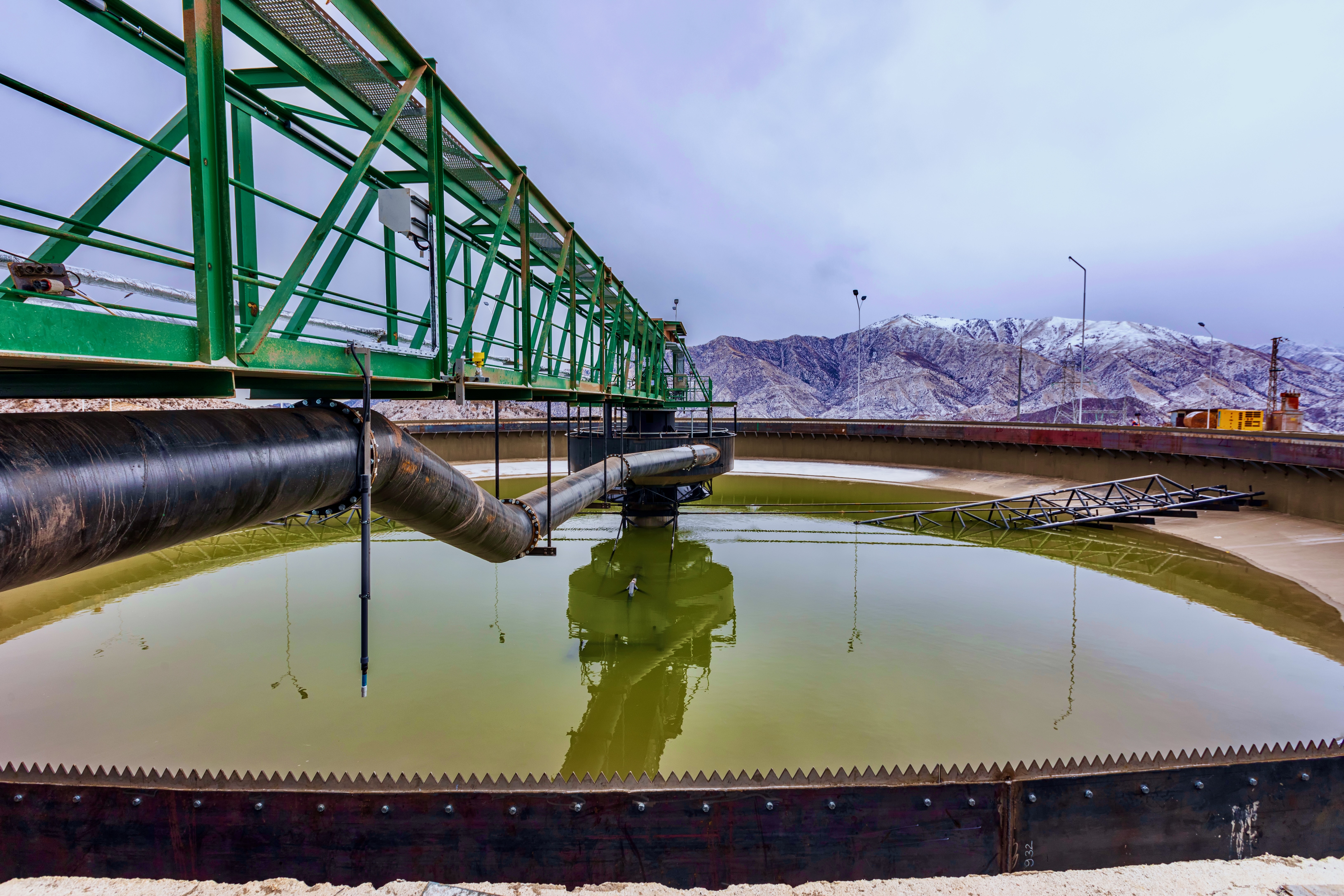
Introduction: The High Stakes of Solid-Liquid Separation
The global mining industry is approaching a waste management inflection point. Current projections indicate that by the end of 2026, the industry will have accumulated approximately 19 billion tons of solid tailings (Hamraoui et al., 2024). In an era defined by the transition to a Circular Economy, the thickener must be repositioned. It is no longer a simple dewatering unit but a vital strategic lever. Poor thickener performance is a primary, yet often hidden, cost center that erodes water security, compromises Tailings Storage Facility (TSF) safety, and increases the operational burden of downstream recovery. To secure the long-term viability of a project, the underflow density must be treated as the foundation of mine-site economics.
The Water Management Paradox: From Deserts to Wet Climates
Water intensity in mineral processing is a staggering metric of operational risk. On average, the water consumption required to process ore is 1371 m³/t for Fe and 43 m³/t for Cu (Hamraoui et al., 2024). This intensity creates a geographical paradox that dictates different thickening strategies:
• Arid/Desert Climates: In water-scarce regions, maximum recovery is an operational survival tactic. Operators are increasingly forced to utilize alternative sources, such as seawater, and must prioritize the aggressive recycling of water from TSFs and thickeners to avoid production halts.
• Water-Rich/Wet Climates: Paradoxically, “too much water” creates extreme geotechnical risk. High-water-content tailings compromise dam stability, necessitating expensive, perpetual dam height raises and the costly treatment of effluent to mitigate Acid Mine Drainage (AMD) before discharge.
Water-Related Operational Risks:
• Aquifer depletion leading to regulatory and social license constraints.
• Structural instability of the TSF, increasing the risk of catastrophic dam failure.
• Elevated OPEX due to the requirement for Best Available Technologies (BAT) in effluent purification.
Climate Change as a Driver for Enhanced Recovery
The industry can no longer rely on legacy performance benchmarks. Data from the Aqueduct Projected Water Stress rankings confirm that by 2040, many of the world’s most productive mining regions will face high water stress (Hamraoui et al., 2024).
Applying a Natural Resource-Based View, environmental preservation is not merely a compliance task but a long-term sustainable competitive advantage. As global temperatures rise and natural resources diminish, the shift toward advanced dewatering is essential to reduce environmental footprint and maintain a “green” organizational standard (Yucel et al., 2021).
Boosting Mineral Recovery via Concentrate Thickeners
Thickening optimization is a primary driver of revenue generation. In a circular framework, historical tailings are no longer viewed as waste but as a “geo-resource.” Many older facilities contain grades between 0.2% and 0.6% Cu, which modern technology can now reprocess (Hamraoui et al., 2024).
Effective flocculation ensures that valuable minerals are not lost to the overflow or trapped in unmanageable, low-density sludge. By managing the hydrodynamic conditions and flocculant dosing, operators can maximize concentrate grade and underflow consistency. Thickener optimization through process control upgrades can go a long ways towards improving underflow stability and increasing recovering.
Tusk Automation: Engineering Predictability into the Process
Modern mineral processing requires more than just mechanical capability; it requires the strategic integration of Knowledge Management (KM) and Total Quality Management (TQM) (Yucel et al., 2021). Tusk Automation provides the expertise needed to transform reactive thickening into a proactive, automated discipline.
Tusk helps mines manage and track complex variables, dynamic in-feed conditions and settling rates. Our focus is on delivering turn-key solutions with limited CAPEX and site downtime that make your separation process more efficient.
Conclusion
Thickener performance is a primary determinant of a mine’s Triple Bottom Line: Economic profitability, Environmental stewardship, and Social responsibility (Yucel et al., 2021). Optimizing your underflow density is the most effective way to secure your water supply, stabilize your infrastructure, and unlock the value of your geo-resources.
Are your underflow density and water recovery meeting your strategic targets? Contact Tusk Automation to conduct a technical audit of your thickening performance and identify the hidden recovery opportunities within your circuit.
Further Reading
• Hamraoui, L., et al. (2024). Towards a Circular Economy in the Mining Industry: Possible Solutions for Water Recovery through Advanced Mineral Tailings Dewatering. Minerals.
• Dwari, R.K., et al. (2018). Studies on flocculation characteristics of chromite’s ore process tailing: Effect of flocculants ionicity and molecular mass. Colloids and Surfaces A.
• SNF Group. Thickening Polymers for Thickening Slurry and Tailing Materials.
• Sustainability (2021). Intelligent Water Management Through Edge-Enabled IoT, AI, and Big Data Technologies.
• Yucel, A.G., et al. (2021). Unleashing the Importance of TQM and Knowledge Management for Organizational Sustainability in the Age of Circular Economy. Sustainability.
Contact Tusk Automation: https://tuskautomation.com/contact-us/